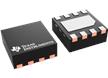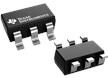

TLV4051R2DBVR

Texas Instruments
595-TLV4051R2DBVR
TLV4051R2DBVR

Mfr.:

Description:
Analog Comparators Low-power comparator with reference (inv

Lifecycle:
New Product:
New from this manufacturer.
ECAD Model:
Download the free Library Loader to convert this file for your ECAD Tool. Learn more about the ECAD Model.

In Stock: 2,909

Stock:
2,909 Can Dispatch Immediately
Factory Lead Time:
12 Weeks Estimated factory production time for quantities greater than shown.
Minimum: 1   Multiples: 1
Unit Price:
$-.--
Ext. Price:
$-.--
Est. Tariff:

Pricing (USD)

Qty. Unit Price
Ext. Price
$1.19 $1.19
$0.86 $8.60
$0.778 $19.45
$0.688 $68.80
$0.645 $161.25
$0.619 $309.50
$0.597 $597.00
$0.557 $1,671.00
$0.551 $4,959.00

Product Attribute Attribute Value Select Attribute
Texas Instruments
Product Category: Analog Comparators
RoHS:  
SMD/SMT
SOT-23-5
1 Channel
1.6 V
5.5 V
- 40 C
+ 125 C
TLV4051
Brand: Texas Instruments
Product: Analog Comparators
Product Type: Analog Comparators
Propagation Delay Time: 360 ns
Shutdown: No Shutdown
Factory Pack Quantity: 3000
Subcategory: Amplifier ICs
Products found:
To show similar products, select at least one checkbox
Select at least one checkbox above to show similar products in this category.
Attributes selected: 0

This functionality requires JavaScript to be enabled.

CAHTS:
8542330000
USHTS:
8542330001
MXHTS:
8542330299
ECCN:
EAR99

TLV40x1 Low-Power Comparators

Texas Instruments TLV40x1 Low-Power Comparators are low-power, high-accuracy comparators with precision thresholds and a propagation delay of 360ns. These comparators are available in an ultra-small, DSBGA package measuring 0.73mm×0.73mm. This makes the TLV40x1 applicable for space-critical designs like portable or battery-powered electronics where low power and fast response to changes in operating conditions are required. The factory-trimmed switching thresholds and precision hysteresis combine to make the TLV40x1 appropriate for voltage and current monitoring in harsh, noisy environments. This is ideal where slow-moving input signals must be converted into clean digital outputs. Similarly, brief glitches on the input are rejected, thereby ensuring stable output operation without false triggering.