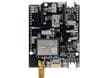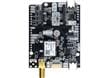

AS-STARTKIT-BASIC-L1L2-NH-02

ArduSimple
780-KITBASICL1L2NH02
AS-STARTKIT-BASIC-L1L2-NH-02

Mfr.:

Description:
GNSS / GPS Development Tools simpleRTK2B - Basic Starter Kit IP67 - Option: Arduino Headers Not soldered

In Stock: 15

Stock:
15
Can Dispatch Immediately
On Order:
66
Factory Lead Time:
8
Weeks Estimated factory production time for quantities greater than shown.
Minimum: 1   Multiples: 1
Unit Price:
$-.--
Ext. Price:
$-.--
Est. Tariff:
This Product Ships FREE

Pricing (USD)

Qty. Unit Price
Ext. Price
$284.33 $284.33

Product Attribute Attribute Value Select Attribute
ArduSimple
Product Category: GNSS / GPS Development Tools
RoHS:  
Starter Kits
ZED-F9P
GPS
Brand: ArduSimple
Dimensions: 20 cm x 10 cm x 3 cm
Packaging: Bulk
Product Type: GPS Development Tools
Series: RTK Starter Kits
Factory Pack Quantity: 1
Subcategory: Development Tools
Unit Weight: 260 g
Products found:
To show similar products, select at least one checkbox
Select at least one checkbox above to show similar products in this category.
Attributes selected: 0

CNHTS:
9031809090
USHTS:
8526910020
TARIC:
8526912099
BRHTS:
85269100
ECCN:
7A994

simpleRTK2B Multiband RTK Application Boards

ArduSimple simpleRTK2B Multiband Real-time Kinematic (RTK) Application Boards are standalone application boards that allow users to evaluate multi-band global navigation satellite system (GNSS) technology, including RTK functionality. The boards are based on the u-blox ZED-F9P module and are fully compatible as a shield with Arduino, STM32 Nucleo, Raspberry Pi, or as an external GNSS for Pixhawk autopilots. simpleRTK2B is a cost-effective shield that supports multi-constellation (GPS, GLONASS, BeiDou, and Galileo) and multiband GNSS receivers. The series offers <1cm precision(1σ) with base-rover configuration, <1cm with NTRIP corrections, or <10cm with SSR corrections. The boards are 3.3V and 5V compatible (UART voltage levels are adjusted automatically based on power source voltage). ArduSimple simpleRTK2B Multiband Real-time Kinematic (RTK) Application Boards can be powered directly from the Arduino headers or via a micro USB connector from the simpleRTK2B board.