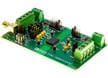

ADL9006-EVALZ

Analog Devices
584-ADL9006-EVALZ
ADL9006-EVALZ

Mfr.:

Description:
RF Development Tools Eval Board

Availability

Stock:
Non-Stocked
Factory Lead Time:
10 Weeks Estimated factory production time.
Minimum: 1   Multiples: 1
Unit Price:
$-.--
Ext. Price:
$-.--
Est. Tariff:
This Product Ships FREE

Pricing (USD)

Qty. Unit Price
Ext. Price
$1,007.77 $1,007.77

Product Attribute Attribute Value Select Attribute
Analog Devices Inc.
Product Category: RF Development Tools
RoHS:  
Evaluation Boards
RF Amplifier
ADL9006
2 GHz to 28 GHz
Brand: Analog Devices
Maximum Operating Temperature: + 85 C
Minimum Operating Temperature: - 40 C
Operating Supply Voltage: 5 V
Packaging: Bulk
Product Type: RF Development Tools
Factory Pack Quantity: 1
Subcategory: Development Tools
Products found:
To show similar products, select at least one checkbox
Select at least one checkbox above to show similar products in this category.
Attributes selected: 0

CNHTS:
8543709990
CAHTS:
8543900000
USHTS:
8543906800
JPHTS:
854390000
TARIC:
8543900000
MXHTS:
8543900100
ECCN:
EAR99

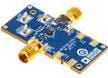
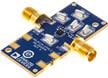
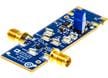
ADL9006-EVALZ Amplifier Evaluation Board

Analog Devices ADL9006-EVALZ Amplifier Evaluation Board consists of a 2-layer printed circuit board (PCB) fabricated from 10mil thick Rogers 4350, copper-clad, mounted to an aluminum heat sink. The heat sink provides thermal relief to the device and mechanical support to the PCB. Mounting holes on the heat sink allow attachment to larger heat sinks for improved thermal management. The RFIN and RFOUT ports on the ADL9006-EVALZ are populated with 2.9mm female coaxial connectors, and the respective RF traces have a 50Ω characteristic impedance. The Analog Devices ADL9006-EVALZ is populated with components suitable for use over the entire -40°C to +85°C operating temperature range of the ADL9006. A through calibration path, THRU CAL, is provided between the J5 and J6 connectors to calibrate outboard trace losses. J5 and J6 must be populated with RF connectors to be used through the calibration path. The power, ground, gate control, and detector output voltages are accessed through two 4-pin headers.